Progression to next year
To progress to the next year of study, you need to have fulfilled the academic regulations for your current year of study. These are:
Level 4 (first year): You must achieve an average of 40% across the year (including any failed modules) and achieve pass marks in at least 90 credits. N.B. your modules for the year add up to 120 credits.
Level 5 (second year): You must pass (or achieve a compensated pass in) all modules (120 credits).
Full assessment regulations and information about reassessment, degree calculation, support, etc. can be found on our website .
Results Decisions
On results day, when you access the portal, at the top, it will give you the exam board’s decision, which is likely to be one of the following:
•
Pass and Progress (P&P) – Congratulations, you have passed your assessments and can progress to the next level of your programme.
•
Referred 1st Reassessment At Next Opportunity (REF1) – You have failed your first assessment attempt and will be re-assessed at the next opportunity. Module marks are capped at 40.
•
Deferred to Next Opportunity (DEF1) – Your evidenced extension request has been accepted and you will take the assessment again at the next opportunity as a first attempt. No cap on module marks.
•
Referred 1st Reassessment Next Academic Year Without Attendance (REFWO) – You have failed your first assessment attempt, and you will be re-assessed during the next academic year. You will not be required to attend. This is for students who have failed less than 120 credits.
•
Referred 1st Reassessment Next Academic Year With Attendance (REFWA) – You have failed your first assessment attempt and will be re-assessed during the next academic year. You will be required to attend all taught sessions. For students who have failed 120 credits.
•
Fail (No Further Opportunity) (FNOP) – You have failed the assessment requirements for your award and may not continue on your programme of study at this University.
Results Day: What happens next?
If you receive ‘Pass and Progress’, relax, congratulations, see you in September!
•
If you received a decision of Referred 1st Reassessment At Next Opportunity or Deferred to Next Opportunity, it will specify which individual modules you are required to submit in the summer reassessments. You will receive communication via your university email by Thursday 9th July, with guidance.
•
If you received notification of a repeat year (with or without attendance), you will receive a communication from our Undergraduate Programme Support Tutor by the end of July, detailing what you need to do next.
•
If you receive a ‘Fail, no further opportunity’, you have the right to lodge an appeal to that decision should you want to. This needs to be done through your Student Union, not department staff.
Stepping up to Second Year (Level 5)
In your second year, the academic level will intensify, and the work will be more in-depth with specialised course material.
•
Attending lectures, seminars, and tutorials is even more important.
•
Developing effective study habits, such as creating a study schedule, taking detailed notes, and asking questions is vital.
•
Try to make a habit of spending some time working on assignments, extra reading, or extra-curricular work each week in a quiet space, such as the library.
•
Engaging in networking events and making connections with professionals can open doors to internships, job opportunities, or mentorships.
•
The habits you form in this second year will have a big influence on your approach to your final year.
Getting Ahead on Placements
Placements Overview – What is a Placement?
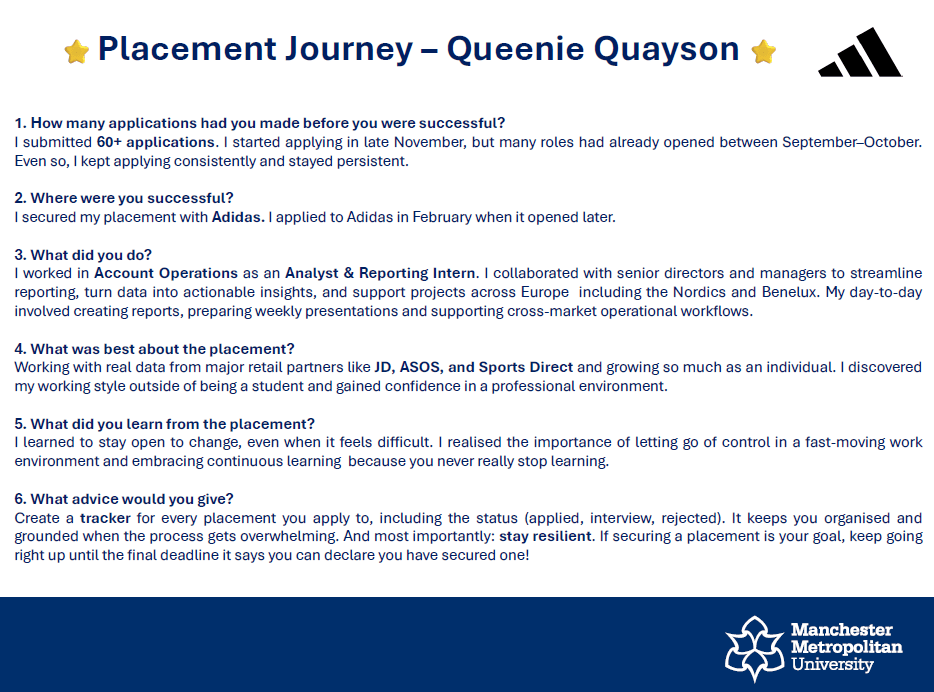
Full year of paid work after your second year of studies.
Remain a student while you work instead of attending classes.
Return to full-time study for your final year after the placement
Benefits:
Gain real-life work skills and improve your employability to get ahead before graduation.
Placements are assessed and accredited on your degree certificate.
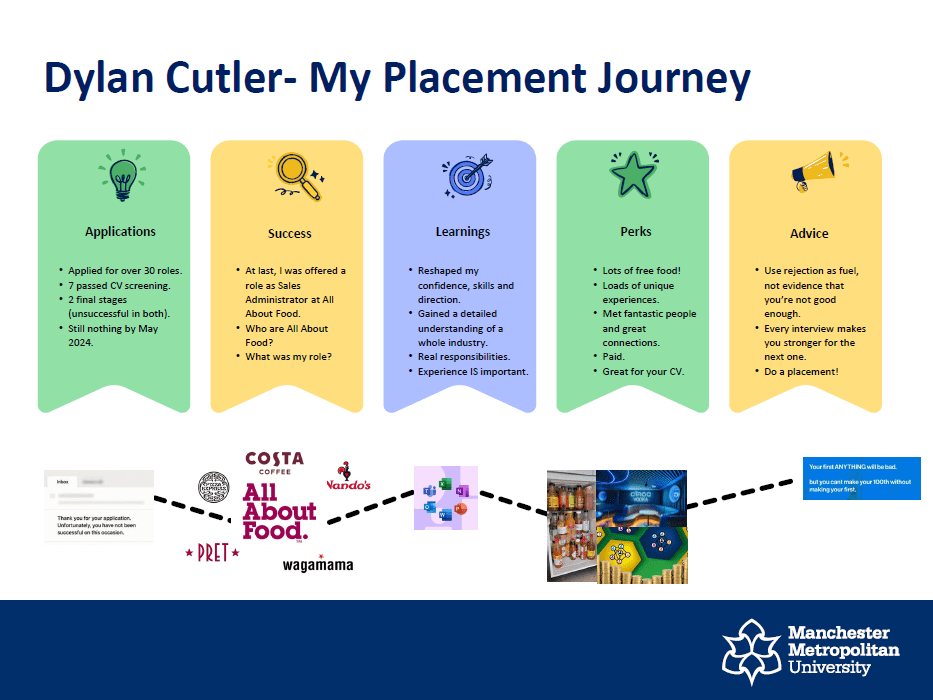
Why Start Now?
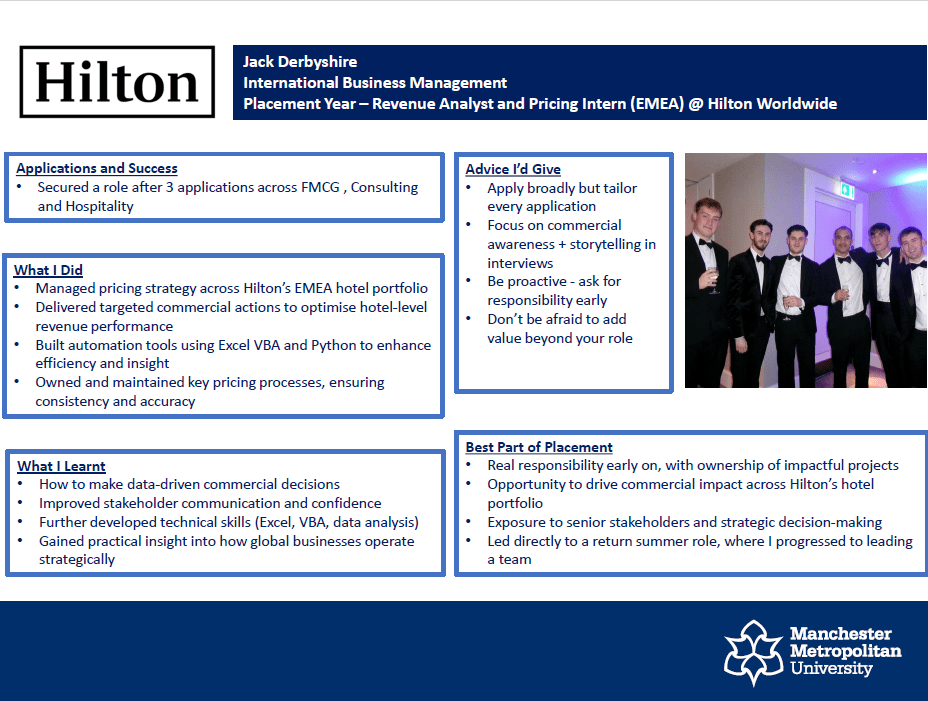
Placements are competitive and you apply independently; start preparing now by finding a summer internship or up your skills with a part-time job.
Recruiters begin advertising roles from summer of first year to semester two of second year.
Support for placements and internships
Events and Workshops: Skills sessions, employer fairs, and networking opportunities.
Digital Application Resources: Help with CVs, cover letters, interviews, and more.
Career Hub: Search for placements and internship roles
The summer break
Once your final assignments for the year are in, and especially if you have no re-assessment commitments, you are probably looking at a nice, long stretch away from the University campus, so what should you do to make sure next year gets off to a flying start?
1.
Look at your feedback. Reflect on where you think you could improve your academic skills. There are online study skills courses running throughout the summer to help you improve.
2.
You could complete one or more RISE courses to expand your skillset and claim RISE points. Check what they have on offer and whether they have any summer internship opportunities.
3.
Complete some voluntary work or start applying for a part time job to expand your work experience.
4.
Read. Look at the core textbooks on the modules you enjoyed, or you think will be influential on your career focus. Did you read enough? This is where you gain your depth of understanding. The library is open all summer and many titles are available to read online.
5.
Relax, refresh, rejuvenate. Don’t underestimate the importance of this one.
Returning To University in September
Enrolment – later in the summer you will receive an email on your university account asking you to re-enrol. You must do this to be eligible to return and release Student Finance England funding.
Check your emails and calendar for Level 5 activities taking place during Induction Week (w/b 28th September 2026).
It is important you attend induction, as expectations, opportunities and vital information for the year ahead will be given.


 MARKETING, INTERNATIONAL BUSINESS AND TOURISM
Leave a comment