By Muhammad Zain
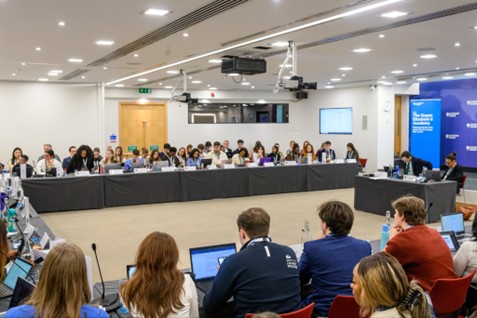
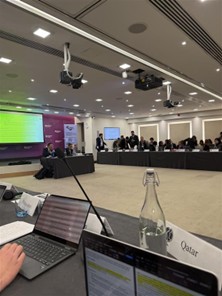
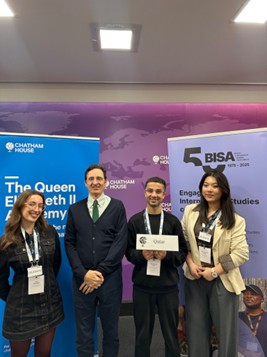
I recently had the privilege of representing Manchester Metropolitan University as Qatar’s delegate at a Model United Nations Framework Convention on Climate Change (UNFCCC) Conference of the Parties (COP) simulation, hosted by the British International Studies Association (BISA) at Chatham House in London. The simulation was facilitated by Professor Mark Webber, whose extensive diplomatic and academic experience added depth to the negotiations. I attended alongside two fellow students (Jessie Wang and Ntea Koronatsi), with whom I worked with during these negotiations.
Stepping into the role of a national negotiator was both challenging and illuminating, offering insights into the intricacies of international climate diplomacy that lectures alone could not provide.

Understanding Climate Negotiations in Practice
The simulation brought together student delegates from other universities across the UK, each tasked with representing their assigned nation’s climate position. Chatham House provided an authentic setting for these discussions, and the experience quickly revealed just how complex international negotiations truly are.
What became immediately clear was that successful climate diplomacy requires more than understanding environmental science. It demands strategic communication, cultural awareness and the ability to navigate competing priorities. Every statement needed careful consideration, and every negotiation required patience and genuine listening.
The challenge of National Representation
Representing Qatar meant developing a comprehensive understanding of the country’s economic context, energy sector and climate vulnerabilities. I spent considerable time researching Qatar’s past COP statements, developing priorities and position within the international community.
This preparation was essential. The simulation required me to think beyond my own perspectives and truly understand how domestic realities shape a nation’s approach to global climate action. It was an exercise in strategic thinking, balancing economic considerations with environmental commitments and understanding how different nations navigate these same tensions.
Throughout the negotiations, I found myself building coalitions with other delegates, seeking common ground on contentious issues and learning the importance of diplomatic language. The precision of wording matters immensely in these settings, seemingly small distinctions in phrasing can significantly impact whether consensus is reached.
Key insights gained
This experience deepened my understanding of international relations in several meaningful ways. I learned that climate negotiations are not simply technical discussions; they are deeply political processes shaped by each country’s unique circumstances, priorities and constraints.
Listening to delegates representing nations from different regions offered a valuable perspective on how varied the global landscape truly is. Each country brought distinct challenges to the table, and understanding these different viewpoints enriched my appreciation for the complexity of global cooperation.
The simulation also highlighted the critical role of strategic communication. Finding language that accommodates multiple interests, building relationships with other negotiators and identifying shared objectives all proved essential to moving discussions forward.
Professional development and future interests
Beyond the substantive knowledge gained, this experience strengthened several professional skills. My ability to communicate across cultural contexts improved, as did my capacity for strategic thinking under pressure. The negotiation process required adaptability, quick analysis and collaborative problem-solving, all skills that translate directly to professional environments.
The simulation also reinforced my interest in the intersection of international relations, strategic management and global business. Understanding how businesses contribute to climate action and navigate international frameworks is increasingly important, and this experience has motivated me to explore this area further.
I am particularly grateful for the opportunity to learn from the other delegates. Observing different negotiation approaches, strategic styles and communication methods provided practical insights that complement academic learning.
One of the unexpected benefits of this experience was the opportunity to network with students from universities across the UK. During breaks and evening discussions, I connected with delegates who shared insights about their own academic paths, career interests and perspectives on international relations. These conversations extended the learning beyond the formal simulation itself.
The networking aspect reinforced that diplomacy happens as much in informal settings as in formal negotiations. Building relationships, understanding others’ motivations and finding common ground often occurred during these less structured moments.
Reflecting on the experience
Participating in this Model UNFCCC COP simulation at Chatham House, London, was a formative experience. It challenged me to think critically about global governance, developed my diplomatic communication skills and offered practical insight into how international cooperation functions.
The opportunity to represent Manchester Metropolitan University in this capacity was genuinely valuable, and it’s an experience that shaped my academic and professional interests moving forward. For anyone considering similar opportunities, I would encourage participation; the learning extends well beyond the classroom in ways that are difficult to anticipate.


 MARKETING, INTERNATIONAL BUSINESS AND TOURISM
Leave a comment